


Instrument Procedures Manual
$87.95
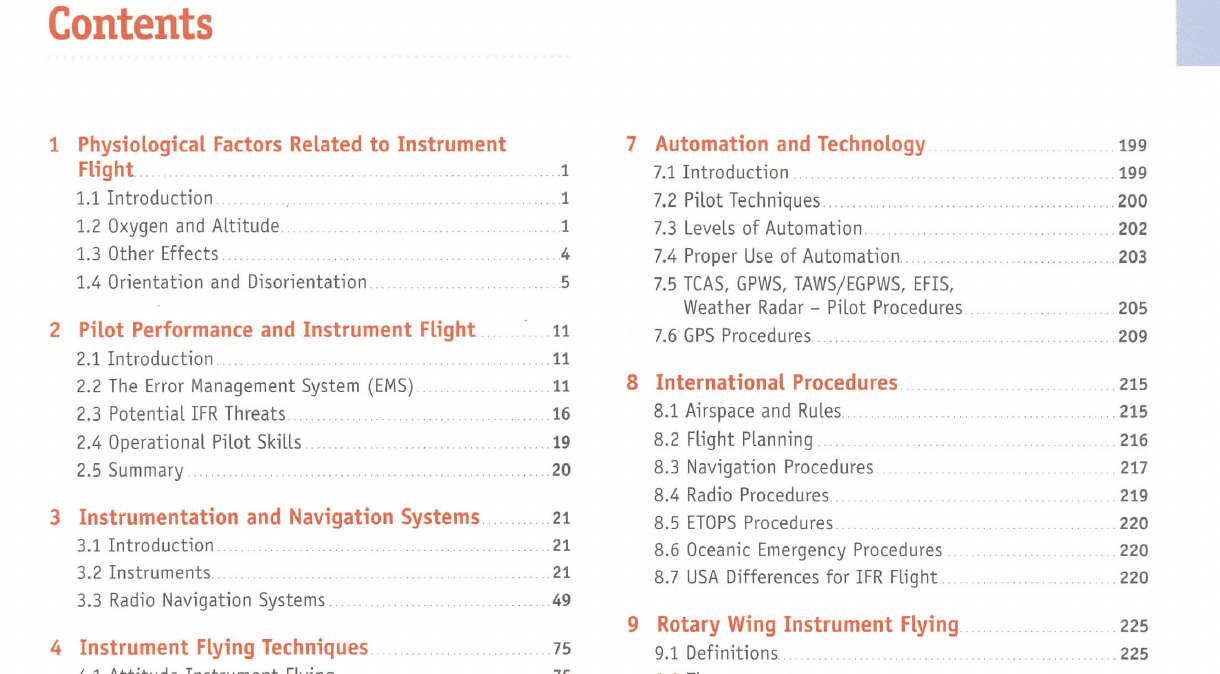
The standard Canadian reference for flying under Instrument Flight Rules. Every phase of an IFR flight, from the departure procedure to the approach ban, explained rather than just listed.
- 284 pages, softcover, 8.5 x 11 inches, colour and black and white throughout
- Departure, enroute and approach procedures, and the ATC rules behind them
- Satellite and ground based navigation systems
- Chapters on pilot performance, automation and international procedures
- Used alongside our Commercial Pilot Ground School
Low cost flat rate shipping anywhere in Canada.
13 in stock (can be backordered)
Description
The Instrument Procedures Manual
IFR is where flying stops being about handling the aeroplane and starts being about operating inside a system. The hard part is not holding a heading on instruments. It is knowing what the system expects of you at each point: what the departure procedure assumes, why the controller cleared you that way, what happens to your clearance when you lose communications, and what you are actually allowed to do when the weather at destination is marginal.
This is the Canadian book that explains that system. It is the standard IFR reference here, it is thorough, and it is written to be understood rather than merely complied with. Instrument students buy it at the start of the rating and keep using it long after the ride.
What it covers
There is also a chapter on international procedures, which matters more than students expect the first time they fly somewhere that does things differently.
Where it sits against the official documents
The TC AIM and the Canadian Aviation Regulations are the authority. They tell you what the rule is. They are not written to teach, and nobody learns instrument flying by reading them front to back.
This manual is the teaching text that sits alongside them. It explains why the rule exists and how the procedure is flown, so that when you go back to the AIM for the exact wording you already understand what you are reading. Both the printed TC AIM and this book are worth owning if you are working on an instrument rating.
For the written exam
This book teaches the subject. For working through exam style questions, most students pair it with the Aerocourse Instrument Rating Workbook, which is a question bank rather than a text. Use the manual to learn it and the workbook to find out what you have not learned yet.
If you are still working toward the commercial licence, our Commercial Pilot Ground School covers the syllabus that precedes all of this, and the rest of our ground school courses are there when you are ready for the next rating.
Questions about the Instrument Procedures Manual
Is there a PDF version?
Not a legitimate one that we are aware of. Older copies of earlier editions circulate online, but the current edition is a substantial revision and the material in those older files is out of date in the places it matters most. If you are studying for a rating, buy the current printed edition.
Do I need it for the instrument rating, or just the exam?
For the rating. It is a procedures text rather than an exam crammer, so its value is in the flying and the understanding that sits behind the written. Pilots keep it on the shelf and go back to it years later before an instrument proficiency check.
Is it Canadian?
Yes, and that is the point. The procedures, the airspace, the ATC phraseology and the regulations are Canadian. American IFR texts are good books that will teach you a system you do not fly in. The chapter on international procedures covers the differences you will meet when you leave.
Is it useful for a commercial student who is not doing an instrument rating yet?
Yes, and most do it in that order. Instrument material appears in the commercial syllabus, and reading this alongside Commercial Pilot Ground School means the instrument rating later is a continuation rather than a new subject.
What else should I have for IFR?
A current TC AIM, the Aerocourse workbook for practice questions, and a kneeboard that takes full size approach plates. Everything else is in the pilot shop.
Only logged in customers who have purchased this product may leave a review.
Related products
-

-
-
VFR Navigation Chart – VNC
$16.95Select options This product has multiple variants. The options may be chosen on the product page -

Reviews
There are no reviews yet.