

Lake-Enhanced Precipitation
Lake-enhanced precipitation is a phenomenon where cold air flowing over relatively warmer lake surfaces picks up significant moisture and heat, leading to the development of intense snow squalls and heavy precipitation on the downwind shore. In Canada, this is most pronounced around the Great Lakes.
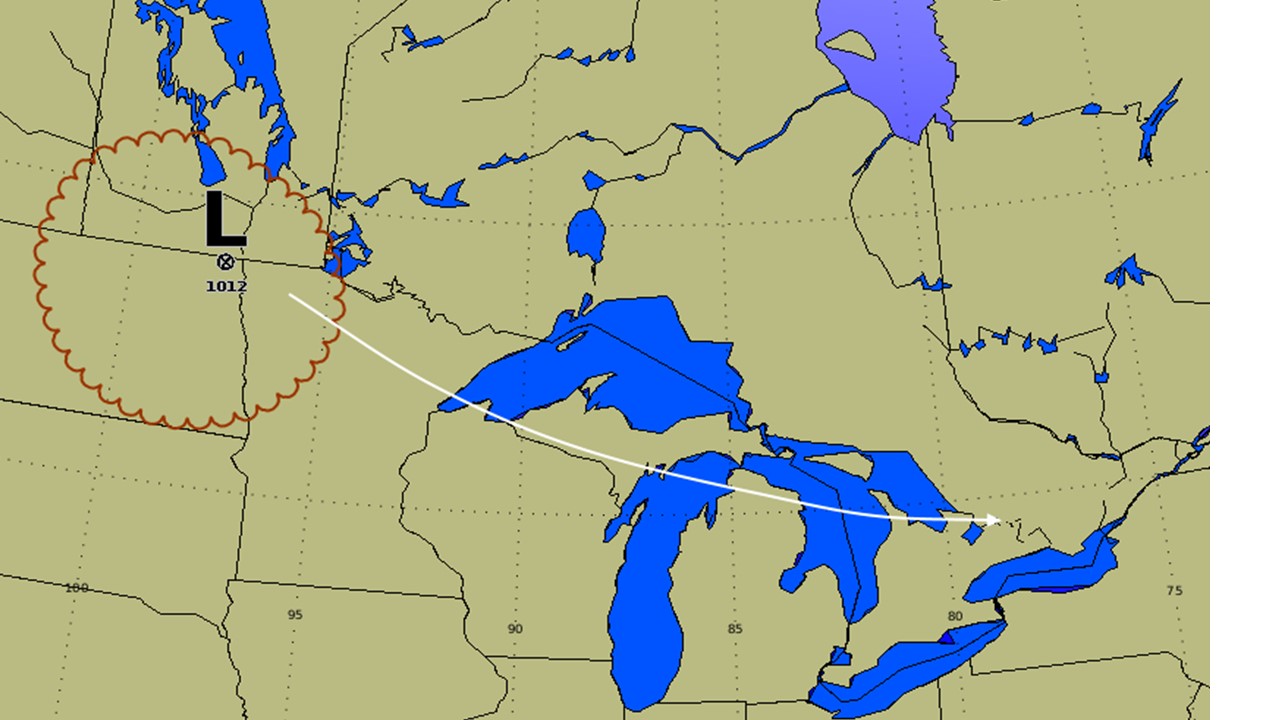
How It Forms
When a cold, dry Arctic air mass flows over an unfrozen lake, the relatively warm lake surface transfers heat and moisture into the cold air. The air becomes unstable. As it reaches the downwind shore, orographic lifting and surface friction cause organized bands of intense convective precipitation to develop. The result can be localized but extremely heavy snowfall — often measured in feet rather than inches — in a narrow geographic band.
Canadian Context
- Lake Ontario snow belt: Communities on the south and east shores (Kingston, Belleville, Cobourg) can receive intense lake-enhanced snow when winds are from the northwest — common in November through January
- Lake Erie: Affects southern Ontario and the Buffalo, NY area
- Georgian Bay: Affects communities along the eastern and southern shore when northwest winds cross the bay
- Lake Superior and Huron: Affect northern Ontario communities
Aviation Hazards
- Sudden onset of heavy snow reducing visibility to near zero in a narrow geographic band
- Rapidly changing conditions — VFR flight can go from good to near-zero visibility within minutes
- Strong gusty winds with heavy snow squalls
- Runway and taxiway contamination requiring frequent snow clearing
- The intense localized nature means forecast products may not capture the exact location and intensity
On the TC Written Exam
Lake-enhanced precipitation (lake-effect snow) appears in the meteorology section. Know: cold dry air over warm water → instability → intense downwind convection; primarily affects the Great Lakes region; localized and difficult to forecast precisely.
Related Terms
See also: Snow Squall, Atmospheric Stability, Snow.