
ADHD in Aviation

Short answer: if you currently have an ADHD diagnosis, or you’re currently taking medication for it, you cannot hold a Canadian aviation medical. That applies to every category, including the Category 4 self-declaration used for the Recreational Pilot Permit. No medical, no solo, no licence.
That’s where most articles stop, and it’s why we rewrote this one. A large number of people asking whether they can be a pilot with ADHD were diagnosed as children, took medication for a few years, stopped a decade ago and have been fine ever since. Plenty of them are flying today. The path exists, it’s written down, and it takes months rather than years. It just isn’t quick, and nobody explains it properly.
Here’s our whole view in practical terms.
- What Transport Canada actually says
- What ADHD actually is
- Why the medication is disqualifying too
- Where you fall
- The path after a past diagnosis
- The Comprehensive Mental Health Assessment
- Neuropsychological testing
- Cost, and how people shorten the wait
- What this looks like on a calendar
- The medication list
- Ignore the internet on this one
- If you think you might have ADHD
- Make sure it’s actually ADHD
- Frequently asked questions
What Transport Canada actually says
The rules for a pilot with ADHD are set out in Staff Instruction 404-006, Attention Deficit/Hyperactivity Disorder, effective June 1, 2023. It says plainly that ADHD and the medications used to treat it are each disqualifying for aviation medical certification, under sections 1.1, 2.1, 3.1 and 4.1 of Standard 424. Those four sections cover all four medical categories, so this is not a commercial-only problem.
The reasoning is in the background section. ADHD symptoms come and go with the setting, and can look fine in a one-on-one office visit while still being a problem in a cockpit. The instruction also cites a 2021 systematic review of 82 studies linking ADHD to higher accident and injury rates across all age groups. Whatever you think of that, it’s what the decision rests on.
Canada isn’t an outlier. The instruction notes the same approach at the FAA, the UK CAA and Australia’s CASA.
What ADHD actually is
ADHD is a persistent pattern of inattention, hyperactivity or impulsivity that gets in the way of how someone functions day to day. Transport Canada uses the DSM-5 definition, which also covers the older diagnoses people were given years ago under different names, including plain ADD. So if you were labelled with ADD in 2004, you’re in the same conversation.
Two things about it matter more in aviation than they do anywhere else.
The first is that it isn’t constant. Symptoms come and go depending on the setting. Someone with ADHD can look completely fine when the situation is new, when the task is interesting, when there’s close supervision, or when they’re sitting one-on-one with somebody. That happens to describe a doctor’s office exactly. It’s why Transport Canada wants reports that describe how you function across different settings over time instead of how you came across in one appointment. It’s also why a first flying lesson tells you almost nothing. New, interesting, and an instructor beside you the whole way.
The second is the numbers. About 5% of children and about 2.5% of adults have ADHD. The gap between those two figures is most of the reason this article exists. A lot of people who carried a childhood diagnosis don’t meet the criteria as adults, and that is exactly the situation Transport Canada has a process for.
Why the medication is disqualifying too
The part that surprises people is that treating it properly doesn’t solve the certification problem. ADHD and the medications used to treat it are disqualifying separately. Here’s what sits behind that, in cockpit terms rather than policy terms.
The dose wears off. Stimulant medication works on a schedule, and the back end of that schedule is a real thing. Fatigue, irritability, concentration dropping away as it clears. On the ground you notice it and get on with your evening. On day three of a pairing, on the fourth leg, at the end of a duty day, that is the last moment you want your attention falling off a cliff. Airline flying runs on early starts, time zones and broken sleep. None of that fits neatly around a dosing schedule.
Missing a dose is ordinary life, and ordinary life is where aviation goes wrong. You land in Halifax and your pills are in the bag that went to Vancouver. The pharmacy is closed. You’re flying home in the morning. Now you’re operating in a state you haven’t flown in for years, and the pressure to just go is enormous, because the alternative is calling in and explaining why. That isn’t some far-fetched scenario. That’s the standard one. Any medication where missing it changes how you perform sets up the same trap.
Hyperfocus is not the same thing as good attention. People talk about it as the upside of ADHD, and in some jobs it genuinely is. In a cockpit it’s a hazard with a long accident history behind it. Task fixation is what puts a crew heads-down on one problem while the aeroplane quietly does something else. Every CRM course teaches the same lesson off the back of the same accidents: a crew troubleshooting a light with nobody flying the aircraft. Gear, fuel, altitude, a missed call, a runway change. Fixation doesn’t feel like inattention from the inside. It feels like concentrating hard, which is what makes it dangerous. We cover this properly in our CRM course, and it’s the same failure whether or not anyone involved has ADHD.
Divided attention is the actual job. Flying isn’t one task done well. It’s flying the aircraft, running a checklist, listening to a frequency, watching the weather and thinking about the next twenty minutes, all at the same time, while constantly deciding which of those matters most right now. Anything that degrades that switching degrades the core skill, whether it’s the condition, the medication, or the gap between doses.
There are physical effects too. Stimulants raise heart rate and blood pressure, and they commonly affect sleep and appetite. Stack that on top of fatigue, dehydration, long duty days and cabin altitude, and you’ve got a combination nobody has studied in the way a regulator would need before signing it off.
None of this says people with ADHD make bad pilots, and Transport Canada doesn’t say that either. What it says is that the condition and the treatment both add variability to attention, and attention on a schedule is the one thing this job can’t flex on. The regulator’s answer is a period without medication and evidence of stable function before the conversation starts.
Where you fall
Whether you can fly as a pilot with ADHD in your history comes down to which of three situations you’re in.
Diagnosed now, or on medication
Unfit for all categories. If you already hold a medical and you get diagnosed or start medication, you are required to ground yourself under CAR 404.06(1)(a). Don’t wait to be told.
Suspected, or being assessed
If you hold a medical, you’ll be assessed unfit until Transport Canada has enough information. If you’re a new applicant, your file is deferred. Either way it doesn’t move until an assessment lands on their desk.
Diagnosed in the past, off medication
This is the group with a real path, and it’s the rest of this article.
The path if you were diagnosed years ago
To be considered for a medical, you have to be stable, functional, and no longer meet the DSM-5 criteria for ADHD, assessed a minimum of six months after you stopped taking any medication used to treat it.
Read that again, because the six months is a floor, not a waiting period you can serve in advance. The assessment has to happen after those six months have passed, not during them.
The Comprehensive Mental Health Assessment
This is the main document, and it isn’t a note from your family doctor saying you seem fine. Appendix A of the staff instruction lists exactly what the report has to contain:
- History of the presenting problem
- A psychiatric review of symptoms, including depression, anxiety, mania, panic attacks, trauma, obsessions and compulsions, and psychosis
- Past mental health history, including hospitalizations, prior diagnoses and treatments
- Medications: type, dose, frequency, expected course of treatment, side effects and effectiveness
- Substance use history, including alcohol and cannabis
- Contributory family psychiatric history
- Contributory social and developmental history
- Contributory medical and surgical history
- Diagnoses under DSM-5, addressing ADHD against the actual criteria, and ruling in or out depression, anxiety, panic disorder, learning disorders, dyslexia and other neurocognitive conditions
- A management plan
- A prognosis based on consistent function and stability across multiple contexts
- Anything else relevant, including the clinician’s own concerns about aviation safety
That second-to-last point is what sinks weak reports. The instruction says outright that reporting on function in isolated encounters or specific settings is not enough. A clinician writing “patient presented well in clinic” has wasted your money. They need to speak to how you function at work, at school and at home, over time.
The single most useful thing you can do: print Appendix A of SI 404-006 and hand it to whoever is writing your report. Most psychiatrists and psychologists have never seen a Transport Canada file and will write a standard clinical letter that misses half of this. Giving them the checklist is what stops a rejection and a second round of fees.
Neuropsychological testing
Transport Canada may also require neuropsychological testing. It’s at the discretion of the Regional Aviation Medical Officer, so it isn’t automatic, but plan for it.
If it’s required, two things apply. It has to be done at least six months after you stopped ADHD medication, and you’ll be drug tested at the time of testing to confirm the results are valid. They will check that you’re actually off the medication rather than taking your word for it.
Neuropsychological testing is a long appointment. Several hours of interviews and standardized testing, plus report writing time afterward.
Cost, and how people shorten the wait
Two practical realities nobody warns you about.
Testing can be expensive. Where full neuropsychological testing is required, applicants have reported bills around $4,500 for the package: hours in front of a computer doing standardized attention testing, combined with a full developmental and family history. It usually isn’t covered by provincial health insurance. Ask for the quote in writing before you book, and ask what’s included.
The wait can be worse than the cost. A mental health referral through a family doctor has meant waits of many months across much of Canada, with psychiatry intakes booked close to a year out in some regions not long ago. If your plan is to sort your medical this year, a nine month wait for a first appointment is the thing that actually stops you.
Ways people shorten it:
- Online medical clinics can issue a referral to a psychiatrist, and the appointment often comes far faster than the family doctor route. Useful for getting a baseline assessment on the record without losing a year first.
- Workplace benefits and disability programs. If you have coverage through work, check it. Assessments are often funded as part of a disability or return to work process, which can be both quicker and paid for.
- Psychologists rather than neuropsychologists. Transport Canada may accept a report from a psychologist who knows ADHD well, or who does workplace and occupational assessments, as long as the report properly covers everything in Appendix A. That can cost a fraction of the full battery.
Two honest caveats on that last point. If a Regional Aviation Medical Officer has specifically asked for neuropsychological testing with confirmatory drug testing, a cheaper report doesn’t replace it. And none of this changes the substance of what’s required: six months off medication, an assessment that addresses the DSM-5 criteria, and function demonstrated across multiple contexts. You can shop for a faster and cheaper route to a qualified opinion. You can’t shop for a different answer, and a report that reads as though someone went hunting for a particular conclusion will hurt you more than waiting would have.
Before you spend anything, ask your CAME what Transport Canada is likely to want in your case. It’s a cheap phone call that can save you thousands. You can find a CAME near you on Transport Canada’s directory, and it’s worth asking whether they’ve handled an ADHD file before. Some have walked several applicants through it and some haven’t seen one.
What this looks like on a calendar
- Talk to a CAME first. Tell them the history before you book anything else. Some will advise you on sequencing, which saves money.
- Find someone to write the assessment. A psychiatrist or psychologist who will do a proper Comprehensive Mental Health Assessment. Give them Appendix A.
- Do the assessment and get the report. At least six months after your last dose.
- Your CAME submits it with your medical file to Transport Canada.
- Transport Canada reviews. They may come back asking for neuropsychological testing, which adds another round of booking and waiting.
For most people going through this as a pilot with ADHD in their past, from first phone call to a decision expect a few months if nothing extra is asked for, and six months or more if testing is required and you’re waiting on appointments.
If you’re currently on medication and you want to fly, the clock starts when you and your prescriber decide together to stop. Six months minimum after that before the assessment, then the process above. That decision belongs to you and your doctor, not to a website and not to a flight school. Stopping a medication that’s working so you can fly is a real trade, and for some people it’s the wrong one.
You don’t need a medical to start ground school
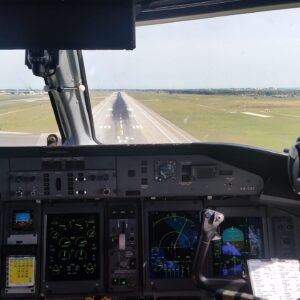
If you’re waiting on appointments and paperwork, that’s the best time to get the written exam out of the way. Ground school has no medical requirement, and you’ll walk into the flight school ready to fly instead of starting from zero. Our Private Pilot Ground School is Transport Canada accepted and taught by working airline pilots.
- Study at your own pace, on your own schedule
- Letter of recommendation when you pass our practice exams
- T2202 tuition tax receipt
The medication list, and why non-stimulants don’t get you around it
People often ask whether switching to a non-stimulant fixes the problem. It doesn’t.
Staff Instruction 404-005 lists psychostimulants, amphetamines and other medication used to treat ADHD among the high risk medications, with the note that exceptions are not generally granted. The phrase “other medication used to treat ADHD” is doing the work there. It isn’t about whether the drug is a stimulant. It’s about what you’re taking it for.
Worth knowing while you’re at it, because it catches people out on the same form: sedating antihistamines like Benadryl and Gravol are on that high risk list too, along with benzodiazepines, opioids, cannabinoids and muscle relaxants. Antidepressants require review and approval, and some SSRIs can be approved under a specific guideline. More on the exam itself in our guide to the Transport Canada aviation medical.
Ignore the internet on this one
Go looking for advice about ADHD and flying and you’ll find plenty of people telling you to keep quiet. Don’t mention it, don’t bring it up, your doctor won’t know. It’s terrible advice, and it comes from people who have misread what the medical is for.
Start with the obvious. If you were prescribed medication as a child and you haven’t taken it in fifteen years, and you’ve gone through school, work and life since without incident, any doctor with half a brain can see what that is. It’s a common story. It’s in thousands of files. Nobody is startled by it.
The other thing people misunderstand is what a Civil Aviation Medical Examiner is doing. They are not there to catch you out. They’re not assembling a case and shipping it to Ottawa so someone can take your licence away. What they’re looking for is the person in front of them who is struggling right now, or who is in the middle of being assessed, or who is on medication and hoping nobody asks. That’s the safety risk the system is built around, and fairly so, because that’s the person who might not be safe in an aeroplane next week.
There’s real discretion in how these files get handled, and most CAMEs understand the difference between a remote childhood diagnosis and an active one. A Comprehensive Mental Health Assessment is going to be needed either way if there’s a diagnosis in your history. The difference is how much else gets asked for on top. The more recent and the more active the picture, the more involved it gets. A prescription you stopped in grade nine is a different conversation than one you stopped last spring, and it gets treated like one.
So be straight with your doctor. Say what happened, when it happened, and what your life has looked like since. If that means being grounded for a while, then it does, and the process above is how you work your way back. Doctors have an obligation to ground you when it’s warranted. They also want to see you healthy and flying, and they spend far more of their time helping people get back in the air than keeping them out of it.
There’s a practical angle too. The people who hide things build a file that unravels at the worst possible moment: an insurance review, an accident investigation, an airline medical years later. Undisclosed history found afterward is a far bigger problem than disclosed history handled properly at the time. And formally, making a false representation is an offence under section 7.3(1) of the Aeronautics Act.
Tell the truth and the system usually works. Hide things and you’re building a problem that compounds with every year you keep flying on it.
If you think you might have ADHD and you haven’t been diagnosed
This is the hardest version of the question, and I’m not going to pretend otherwise.
Getting assessed may cost you your medical, at least for a while. Not getting assessed leaves you carrying something that affects your work, your study and everything else. Some people read the rules and decide to stay away from a diagnosis on purpose.
What I’d say is this. If it’s genuinely affecting you, it’s affecting your flying, whether or not anyone has written it down. And training is its own screening tool. Debilitating ADHD does not quietly pass a Transport Canada written exam and a flight test.
A no-cost way to test the water
Our PSTAR course is free. It’s the student pilot permit exam material, it needs no medical, and it costs nothing. If you’re sitting in the middle of this question, working through it unmedicated tells you something useful about whether the study side of flying works for you. It isn’t a diagnostic test and it doesn’t prove anything to Transport Canada, but it’s real material and it’s free, so there’s no reason not to find out.
If you get something out of it, consider putting a few dollars toward CAMH instead of paying us. We’d rather that than nothing.
Start the free PSTAR courseFree practice examMake sure it’s actually ADHD
This is worth saying out loud, because self-diagnosis from social media has become its own industry.
A lot of what people identify in themselves as ADHD is avoidant behaviour. Procrastination, an inability to sit with a hard task, going blank under pressure, losing whole evenings to distraction. Those are real and worth dealing with. They’re also what unprocessed trauma often looks like in an adult. Childhood trauma that was never addressed shows up years later as a set of coping habits that look a lot like inattention, and the two can be hard to tell apart without someone experienced looking properly.
The distinction matters for your licence, because the consequences are completely different. A diagnosis of ADHD is disqualifying until you go through the process above. A trauma response you’re working through with a therapist is assessed on its own facts and isn’t automatically a certification problem.
It matters more for your life. Medicating a trauma response as ADHD doesn’t fix the trauma.
If any of that sounds familiar, consider talking to a therapist before you go looking for a diagnosis. Not a prescriber first. A therapist, ideally one with a background in both trauma and ADHD, who can spend real time on your history instead of twenty minutes on a symptom checklist. Someone with both backgrounds is the right person, because ruling one in or out properly means understanding both.
You may come out of that conversation knowing you do have ADHD, and then you’ll go into the medical process with a far better file than you’d otherwise have. Or you may find that what you’ve been calling ADHD for years is something else, and that it’s treatable in ways that never touch your medical. Either answer is worth having.
Frequently asked questions
Can you be a pilot with ADHD in Canada?
You cannot fly as a pilot with ADHD currently diagnosed or while taking medication for it. Both are disqualifying for all four categories of aviation medical certificate. If you were diagnosed in the past and have been off medication for at least six months, you can be considered after an assessment showing you’re stable, functional and no longer meet the DSM-5 criteria.
I was diagnosed as a kid but stopped medication years ago. Can I get a medical?
Yes, this is the most common successful path. You’ll need a Comprehensive Mental Health Assessment confirming you no longer meet the diagnostic criteria, done at least six months after your last dose. Transport Canada may also ask for neuropsychological testing.
Can pilots take ADHD medication?
No. Psychostimulants, amphetamines and other medications used to treat ADHD are listed as high risk in Staff Instruction 404-005, with exceptions not generally granted. That covers non-stimulant ADHD medications too.
How long do I have to be off medication?
A minimum of six months before the assessment takes place. Any neuropsychological testing also has to be at least six months after your last dose, with drug testing at the time to confirm it.
What is a Comprehensive Mental Health Assessment?
A detailed report from a qualified clinician covering your history, symptoms, medications, substance use, family and developmental history, DSM-5 diagnoses, management plan and prognosis, with specific comment on how you function consistently across multiple settings. The full requirement is in Appendix A of Staff Instruction 404-006.
How much does ADHD testing cost for a pilot medical?
It varies. Applicants have reported around $4,500 where full neuropsychological testing is required, and it usually isn’t covered by provincial health insurance. A Comprehensive Mental Health Assessment from a psychologist familiar with ADHD can cost considerably less, and workplace benefit plans sometimes cover assessments.
Will I definitely need neuropsychological testing?
Not always. It’s requested at the discretion of the Regional Aviation Medical Officer. Budget for it anyway, in both money and time.
Does ADHD stop me from getting a Recreational Pilot Permit or flying gliders?
It doesn’t help you there either. The staff instruction applies to all categories, including the Category 4 medical declaration used for the RPP and gliders.
What if I was misdiagnosed?
Same process. You need a proper assessment addressing the DSM-5 criteria and concluding you don’t meet them, done at least six months after any medication stopped. “I don’t think I ever had it” is not something you can self-certify on a form.
Do I have to tell my CAME about a childhood diagnosis?
Yes. You’re required to disclose, and making a false representation is an offence under section 7.3(1) of the Aeronautics Act. A remote childhood diagnosis is a common and well-understood story, and it is handled very differently from a current one.
Who decides?
Transport Canada Civil Aviation Medicine, case by case. Where there’s doubt, the instruction states that safety prevails and a conservative approach is generally taken. Your CAME submits the file but is not the decision maker on this one.
Where to read the rules yourself
Both staff instructions are public. SI 404-006 covers ADHD and SI 404-005 covers medications, and both took effect on June 1, 2023. They sit in Transport Canada’s civil aviation reference centre alongside the Handbook for Civil Aviation Medical Examiners. Read them before your appointment. They’re short, and knowing what’s in them makes the conversation with your CAME much more useful.
If you’re at the start of all this, our guide on how to become a pilot in Canada covers the whole path, and learn to fly walks through the first steps.
Ground school while you sort the paperwork
No medical is required to study. Canadian Flight Trainers teaches Transport Canada accepted ground school online for every licence, built and taught by working airline pilots, and every course starts with a free 7 day trial.
This article explains published Transport Canada policy and is written by a Canadian airline captain and Class 1 flight instructor, not a physician. It is not medical advice and it is not a substitute for speaking with a Civil Aviation Medical Examiner about your own file. Rules change, so check the current staff instructions.
Sources: Transport Canada SI 404-006 (ADHD) and SI 404-005 (Medications), both effective 2023-06-01; CARs Standard 424; CAR 404.06.
Our Other Posts
- Air Canada Pilot Salary: How Much Air Canada Pilots Make in 2026
 Updated September 2026 for the current Air Canada pilot contract. This article was written by a guest columnist who works at Air Canada as a Captain on a narrow body aircraft. He has made extensive contributions to our Commercial Pilot…
 - How to Calculate Cloud BasesAviation Weather How to Calculate Cloud Bases: The Formula Every Pilot Should Know Weather and clouds play a big role in aviation, and one of the most useful skills a pilot can learn is how to quickly calculate cloud bases….
- Night Rating Requirements in CanadaThe night rating is the most commonly added rating to a Private Pilot License in Canada, and for good reason. During night operations, pilots will not generally encounter rising air currents due to convection heating, making flying at night slightly…
- AWWS GFA
AWWS was retired on February 28, 2024. NAV CANADA’s Aviation Weather Web Site no longer exists. Everything it did now lives on CFPS — the live GFA links below are current and working. If you typed “AWWS” into a search…
- Commercial Pilot Ground School – What Our Students ExpectCommercial Pilot Ground School Research What Students Expect From CPL Ground School: 260 Responses Analyzed Commercial students arrive with a licence, some experience, and much less patience for wasted time. We analyzed what they expect from the course, the instructors,…
- Private Pilot Ground School – What Students ExpectPrivate Pilot Ground School Research What Students Expect From PPL Ground School: 1,000+ Responses Analyzed Before students begin our Private Pilot Ground School, we ask what they hope to achieve and what they expect from us. Their answers are a…
- Canadian Pilot Training and Licensing Statistics in 2025/2026Transport Canada Data Analysis Canadian Pilot Training and Licensing Statistics in 2025/2026 Transport Canada presented its newest pilot training and licensing update at an ATAC meeting on June 3, 2026 — final 2025 licensing statistics along with updates on digital…
- Pilot Bag
What is a pilot bag? A pilot bag is also known as a flight bag. It is a bag used by pilots at all stages in their flying to store the necessary pilot supplies used for their flights. Pilot bags…
- What PSTAR Students Say About Flight Training in CanadaPSTAR Student Response Analysis What PSTAR Students Are Really Telling Us About Flight Training We reviewed 3,429 written answers from students signing up for our free PSTAR course. The patterns are useful for students, instructors, and flight schools across Canada….